Junior Achievement of Arizona
Financial Literacy Program Inspires Alumna to Join the Cause
Carina Inganamort can still picture herself holding a microphone in sixth grade, walking through a simulated city as the student news reporter.
She and a classmate moved from storefront to storefront, interviewing fellow students as they deposited paychecks, managed budgets and ran businesses. For one day, they stepped into adult roles and experienced what it felt like to earn, spend and save money.
“It felt so real,” Carina recalls. “We had lunch breaks, earned paychecks and deposited money at the bank.”

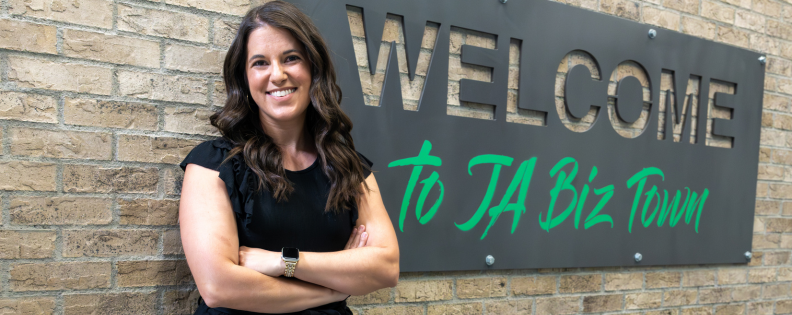
Carina walks through JA BizTown, her organization's simulation town for students.
Junior Achievement of Arizona’s (JAAZ) JA BizTown gives students a hands-on introduction to financial literacy, career readiness and entrepreneurship.
“It’s such a formative age,” she says. “You’re starting to think about money, about work and about who you might become. JAAZ turned those concepts into something tangible. It connected what I was learning in school to real life.”
Years later, Carina spotted a part-time job posting at JAAZ. Expecting her son at the time, she searched for supplemental work to support her family.
“A light bulb immediately went on,” she says. “I thought, ‘Oh my gosh, I know what that is. I was part of that.’”
Six years later, Carina leads marketing for the organization she once experienced as a student.
“I consider myself a lifer,” she says. “What keeps me here is seeing the impact in real time. Students start to understand why saving matters, why communication matters and how education can shape their future.”
JAAZ’s larger programming reaches children from kindergarten through high school, helping students build financial literacy, career exploration and critical thinking skills. Many of the students who participate attend Title I schools in underserved communities.
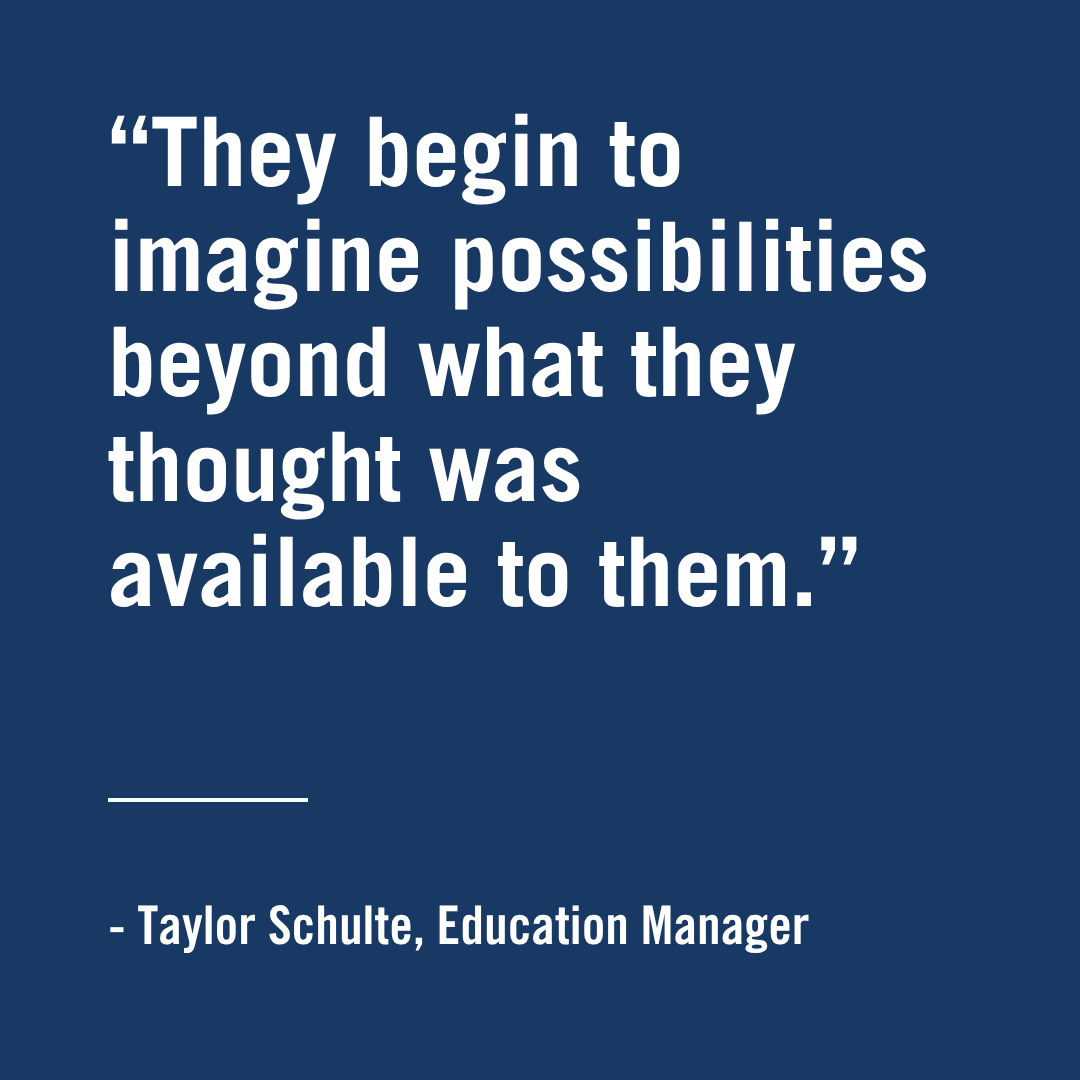
“When volunteers walk into a classroom, students meet professionals they may never have encountered before,” says Taylor Schulte, Education Manager at JAAZ. “They begin to imagine possibilities beyond what they thought was available to them.”
In rural and tribal communities, JAAZ brings its mobile program, JA Money in Motion, directly to students who lack transportation or reliable internet access. The program delivers hands-on lessons that equip students with practical life skills.
Enterprise Bank & Trust has strengthened that work through a growing partnership with JAAZ. The relationship began when Enterprise’s Arizona team engaged through volunteering. Leaders from both organizations soon explored new ways to expand their shared impact.
“When we walk into a school to volunteer, principals and counselors already know and trust JAAZ. That level of community presence takes years to build,” says Uriah Cachora, AVP, Community Development Officer at Enterprise Bank & Trust. “It’s exciting to see how our relationship with JAAZ continues to grow alongside the broader community relationships we’re building together.”
Enterprise donates to the organization annually and sends volunteers into classrooms. Uriah and Diego Luna, AVP, Community Development at Enterprise Bank & Trust, offer strategic guidance as JAAZ grows its presence, particularly in Indigenous communities across the state.
“Without Enterprise, we could not have built the level of connection we now have with Indigenous communities across Arizona,” says Lauren Allen, Education Manager at Junior Achievement of Arizona. “They share invaluable insight on how to approach relationships thoughtfully, ensuring our interactions remain meaningful rather than transactional.”
In Arizona classrooms, Carina watches students step into roles just as she once did — nervous, excited and unsure. “I see myself in them,” she says. “They think they’re just going on a fun field trip. But it’s so much more than that. They’re learning to step outside their comfort zone. They’re discovering what’s possible.”
She often reflects on her sixth-grade self, holding a microphone in a simulated city. “I don’t think she knew it at the time,” Carina says. “But that day planted a seed. And now I help plant those same seeds for thousands of students across Arizona.”